


Workwear Care: Washing and Laundry Label Guide
Workwear care starts with the label on each garment. For hotel and restaurant teams, clean, well-kept uniforms support a professional appearance throughout the shift. The right routine also helps preserve fabric, fit, fastenings and embroidered branding.
Read the care label before washing
Check the complete instructions, including washing, bleaching, drying, ironing and professional cleaning. A fabric composition alone does not tell you how to care for a finished garment: trims, prints, embroidery and construction also matter. Keep the label legible and share the instructions with your laundry provider.
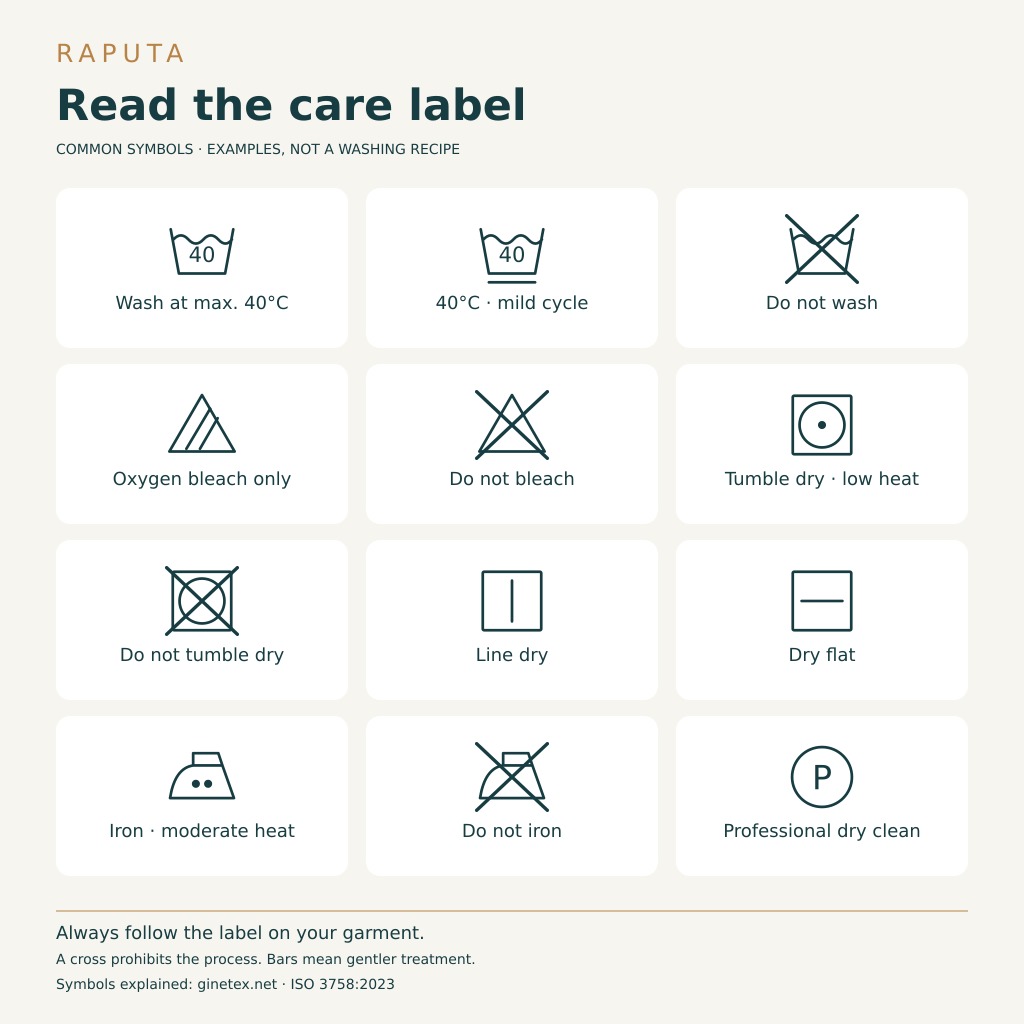
The number in the washtub is the maximum washing temperature. Bars below a symbol call for a gentler process, while a crossed-out symbol prohibits that treatment. The square concerns drying; an iron concerns ironing; a circle gives instructions for professional cleaning. See the GINETEX care-symbol guide for the full explanations.
Sort hotel and restaurant uniforms
Separate light and dark colours, and keep heavily soiled kitchen clothing apart from reception shirts and other lightly soiled items. Check pockets, close zips and secure fastenings before washing. Avoid overloading the machine so garments can move freely and rinse properly.
Choose the wash programme for the garment
Use the temperature and cycle permitted by the care label. There is no single safe temperature for every chef jacket, apron, shirt or housekeeping tunic. For a professional laundry service, confirm that the garment is suitable for the proposed process before placing a bulk uniform order.
Choose a detergent compatible with the fabric and the label instructions. Bleach is suitable only where the label permits it. Treat stains promptly using an appropriate product, test it on a hidden area first, and avoid mixing cleaning chemicals. If a stain remains, check it before applying heat during drying or ironing.
Protect logos, embroidery and details
Where the label allows, wash decorated garments inside out and avoid abrasion against rough fastenings. Do not iron directly onto a print or transfer. Follow any additional instructions supplied for embroidered or personalised uniforms rather than assuming that every decoration tolerates the same treatment.
Dry and iron according to the label
Use a tumble dryer only if permitted, with the indicated heat setting. If natural drying is specified, follow the position shown on the label, such as line drying or drying flat. Remove garments promptly after the cycle and let them dry completely before storage.
Set the iron according to the dots and any restrictions on the label. Check whether steam is permitted. Use particular care around prints, trims and temperature-sensitive details.
Build a practical uniform rotation
Provide enough garments for staff to change into a clean set while other sets are being washed and dried. Store clean, dry uniforms separately from used clothing. Inspect seams, buttons and zips regularly and repair small faults before they interrupt service.
For garments with certified protective functions or specialist finishes, follow the specific manufacturer’s instructions. Ordinary hospitality clothing should not be treated as certified protective equipment unless that status is documented.
Choose uniforms with care in mind
Before ordering, discuss staff roles, fit, fabric, decoration and your laundry routine. Our guide to choosing workwear and hotel uniform overview can help you prepare a clear brief for Raputa.
Related reading
- How to Choose Workwear: A Practical Buying Checklist
- Hotel Uniforms: Reception, Restaurant and Housekeeping
Discuss your project with Raputa
Send your product requirements, quantities and preferred materials through our contact page. Contact Raputa.